What is fluorescence and why is it important in diamonds?
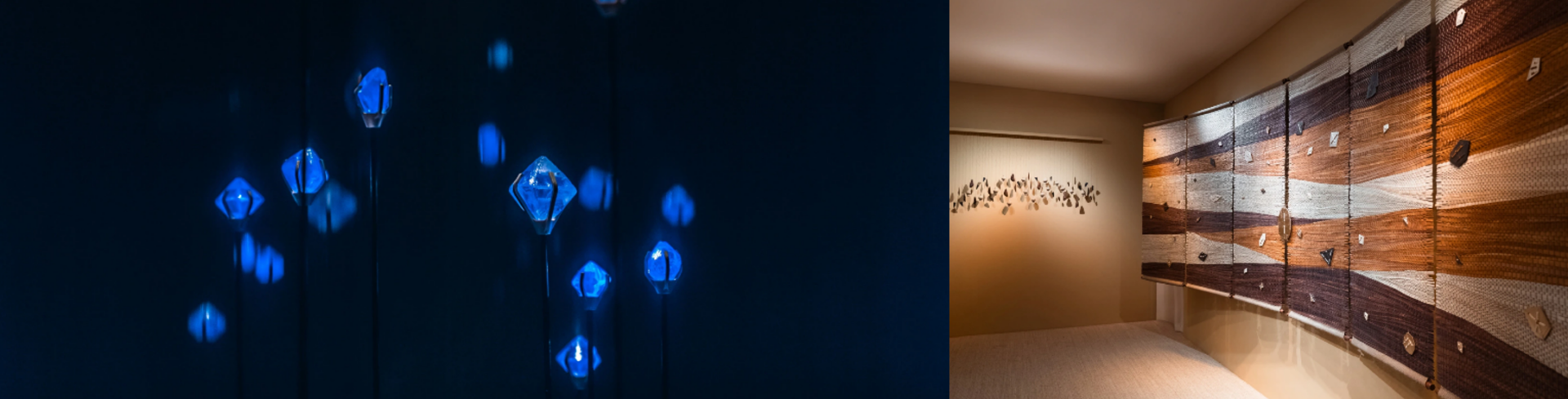
There are many reasons to consider fluorescence in diamonds. It appears as a comment on grading reports, is increasingly being showcased as a unique and intriguing characteristic at industry events and plays an important role in natural diamond verification. Recent examples include the GIA fluorescence displays at JGW Hong Kong and the De Beers Group art installations at Frieze Masters, London, both of which highlighted the striking visual effects that fluorescence can create.
Frieze Masters: Voyage through the Diamond Realm, Chapter II
Fluorescence is also a powerful analytical tool. It is widely used to help distinguish natural diamonds from synthetic laboratory-grown diamonds and forms the basis of several advanced verification technologies, including several De Beers detection instruments.
Before exploring these applications, it is worth considering what fluorescence is, why it occurs, and what it can reveal about a diamond.
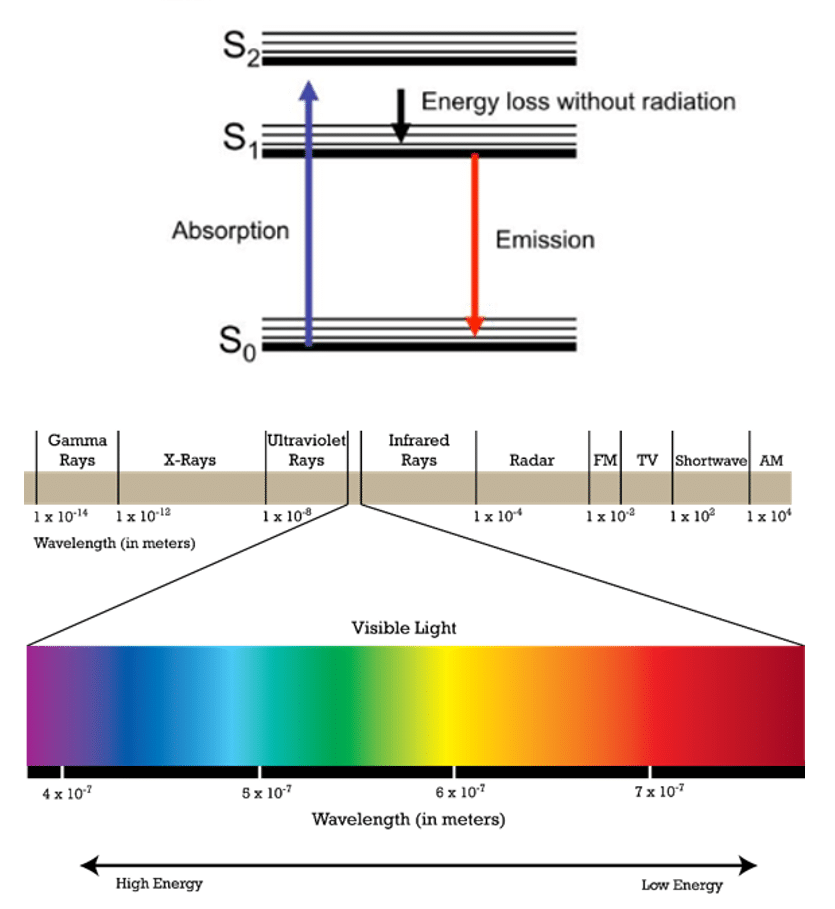
Fluorescence occurs when a diamond absorbs ultraviolet (UV) light and re-emits some of that energy as visible light. This happens because certain atomic defects and impurities within the crystal lattice become energised and then release energy as light.
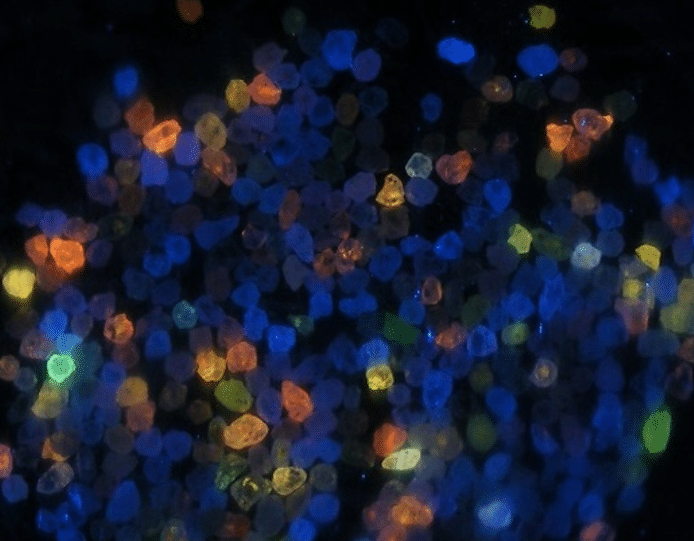
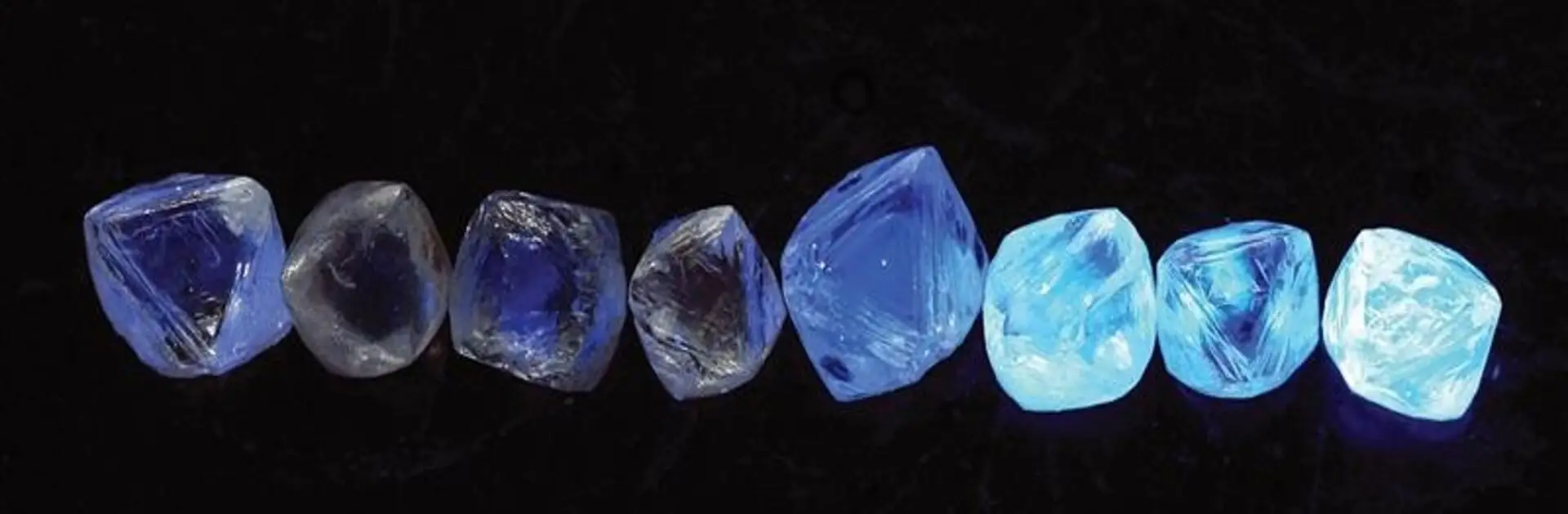
The most common fluorescence colour is blue, although diamonds can occasionally fluoresce green, yellow, white, purple, orange, or red.
The fluorescence originates from tiny atomic-scale features inside a diamond known as defects or impurity centres. These scientific ‘defects’ are not flaws visible to the eye and are unrelated to clarity grading.
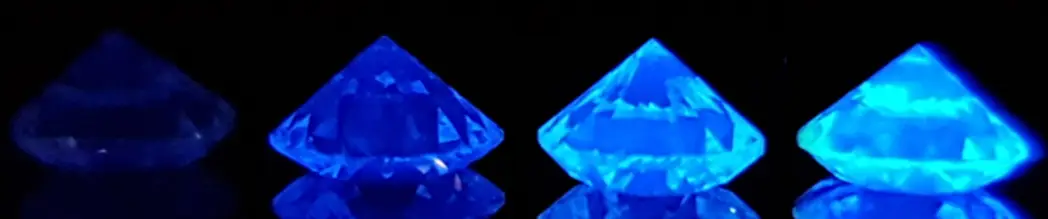
The most common source of blue fluorescence is the N3 centre, a nitrogen-related defect found in many natural diamonds. The intensity of fluorescence depends largely on how concentrated these centres are within the crystal.
Assortment of fluorescent colours in rough diamonds
One of the most common beliefs is that fluorescence makes diamonds look milky, hazy or oily. This perception has contributed to discounts on strongly fluorescent colourless diamonds for many years.
However, fluorescence is usually not the cause of these appearances. In many cases, haziness is caused by microscopic clouds, structural irregularities, or nano-scale inclusions that scatter light.
Strong fluorescence can occasionally amplify an existing transparency issue, but the effect is considered extremely rare. Experienced graders may encounter only a handful of examples during decades of diamond grading.
Selection of polished diamonds showing a variation in fluorescence strength
Fluorescence can occasionally improve the appearance of a diamond. Because blue is complementary to yellow, strong blue fluorescence can visually offset some yellow body colour in lower-colour diamonds. Under UV-rich conditions such as direct sunlight, a diamond with strong blue fluorescence may appear whiter than its laboratory colour grade suggests.
For example, a K-colour diamond with very strong blue fluorescence may sometimes appear closer to a J-colour appearance when viewed outdoors. This effect is only visible when sufficient UV light is present and should not be expected under all lighting conditions.
Fluorescence is valued for much more than its visual appeal or its influence on a diamond’s appearance. It is also an important tool in diamond verification and identification. By examining how a diamond reacts under ultraviolet light, gemmologists can gather valuable information about its origin and growth history.
Different diamonds exhibit distinct fluorescence characteristics, including variations in colour, intensity and pattern. In addition, some diamonds display phosphorescence, a phenomenon in which they continue to emit light briefly after the ultraviolet source has been switch off. Together, these characteristics can provide clues about the conditions under which a diamond formed and help distinguish natural diamonds from laboratory-grown alternatives.
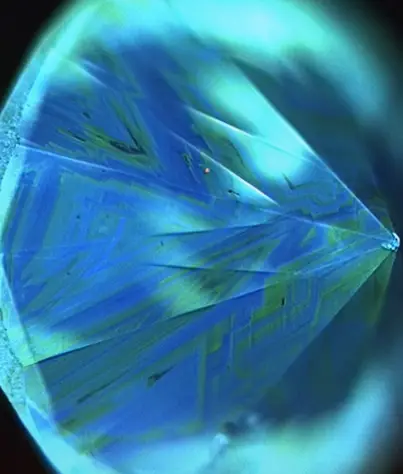
DiamondView image of a natural brown type I diamond
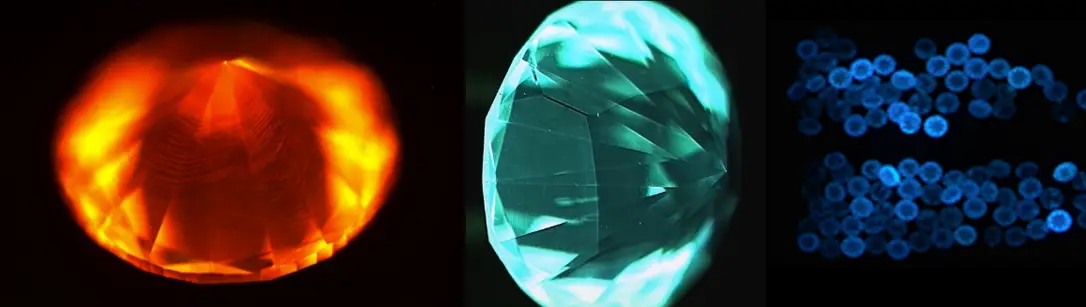
Advanced imaging technologies have made fluorescence analysis an increasingly powerful means of diamond identification. Instruments such as DiamondView™ and SYNTHdetect™ use fluorescence imaging to reveal internal growth structures and patterns that are not visible under normal lighting conditions. These growth features can be extremely useful, enabling trained experts to differentiate between natural diamonds, which formed deep within the Earth over billions of years, and laboratory-grown diamonds created using modern manufacturing techniques.
DiamondView images of CVD (orange) and HPHT (turquoise) synthetic diamonds + Natural diamonds (blue) viewed in the SynthDetect
As a result, fluorescence has become an essential component of modern diamond testing, helping laboratories and industry professionals verify the nature of diamonds with greater confidence and accuracy.
Contact Us
Our diamond and technology experts are available for instrument sales, demos and discussions regarding your diamond verification requirements.